AI-Powered Analytics: How Businesses Turn Data Into Decisions Without Analysts
July 14, 2026
·
Tim Liu
Businesses have more data than ever before.
Marketing teams have campaign data. Sales teams have CRM data. Product teams have usage data. Finance teams have revenue data.
Yet many companies still struggle to answer simple questions:
- Why did revenue drop last month?
- Which marketing channels generate the best ROI?
- Which customers are most likely to churn?
- What should we focus on next?
The problem is not a lack of data. It’s turning data into decisions.
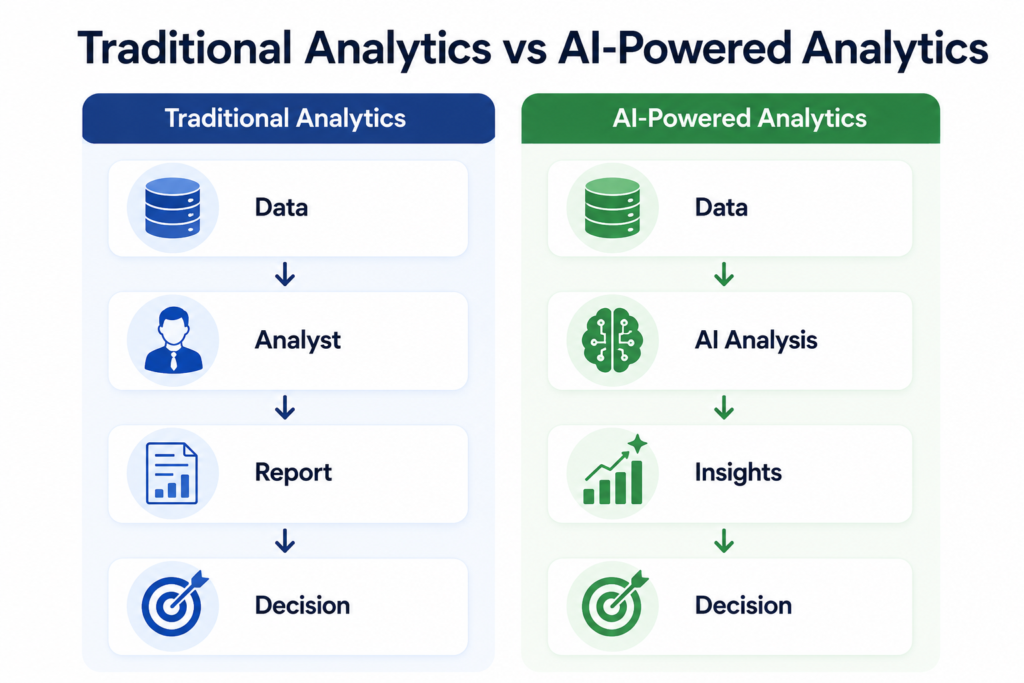
Traditionally, businesses relied on analysts to collect data, build reports, and explain what the numbers meant. That process worked, but it was slow, expensive, and difficult to scale.
Today, AI-powered analytics is changing how organizations analyze data, uncover insights, and make faster decisions.
Instead of waiting days for reports, teams can get answers in minutes.
How Can AI Help Me Understand My Data?
Most businesses already have dashboards.
What they don’t have is clarity.
A dashboard might show that sales dropped by 15%.
But it doesn’t explain:
- Why sales dropped
- Which products were affected
- Which regions underperformed
- What action should be taken
This is where AI-powered business analytics becomes valuable. Instead of presenting isolated reports, it helps organizations connect data from different departments and turn it into meaningful insights.
Can AI Replace Manual Reporting?
Traditional reporting often follows a predictable cycle.
Every week or month, someone:
- Exports data
- Updates spreadsheets
- Builds reports
- Creates presentations
- Shares results with stakeholders
The same work gets repeated again and again. AI-powered analytics reduces much of this effort.
Once data sources are connected, reports and dashboards update automatically. Teams spend less time preparing reports and more time acting on insights.
For example, AI-powered marketing analytics helps marketing teams combine data from Google Analytics, HubSpot, and advertising platforms automatically, making it easier to identify trends and measure campaign performance.
Do I Still Need Analysts?
This is one of the most common questions about AI-powered analytics.
The short answer is yes, but their role changes.
AI is excellent at:
- Processing large amounts of data
- Detecting patterns
- Creating dashboards
- Generating reports
- Monitoring performance
Analysts are still valuable for:
- Strategic planning
- Business context
- Investigation
- Decision-making
- Complex analysis
Think of AI as a tool that removes repetitive work.
Instead of spending hours creating reports, analysts can focus on solving business problems.
For smaller businesses that do not have dedicated analysts, AI-powered analytics can provide many of the benefits traditionally available only to larger organizations.
How Can I Make Faster Decisions From Data?
Most organizations do not need more reports.
They need faster answers.
Imagine a sales team notices a drop in conversions.
Traditional analytics might tell them:
“Conversions decreased by 12%.”
AI-powered analytics goes further.
It can identify:
- Which lead sources declined
- Which regions were affected
- Which products experienced changes
- What patterns occurred before the decline
Instead of spending hours searching for answers, teams can focus on solving the problem.
The faster insights become available, the faster businesses can respond.
What Types of Questions Can AI-Powered Analytics Answer?
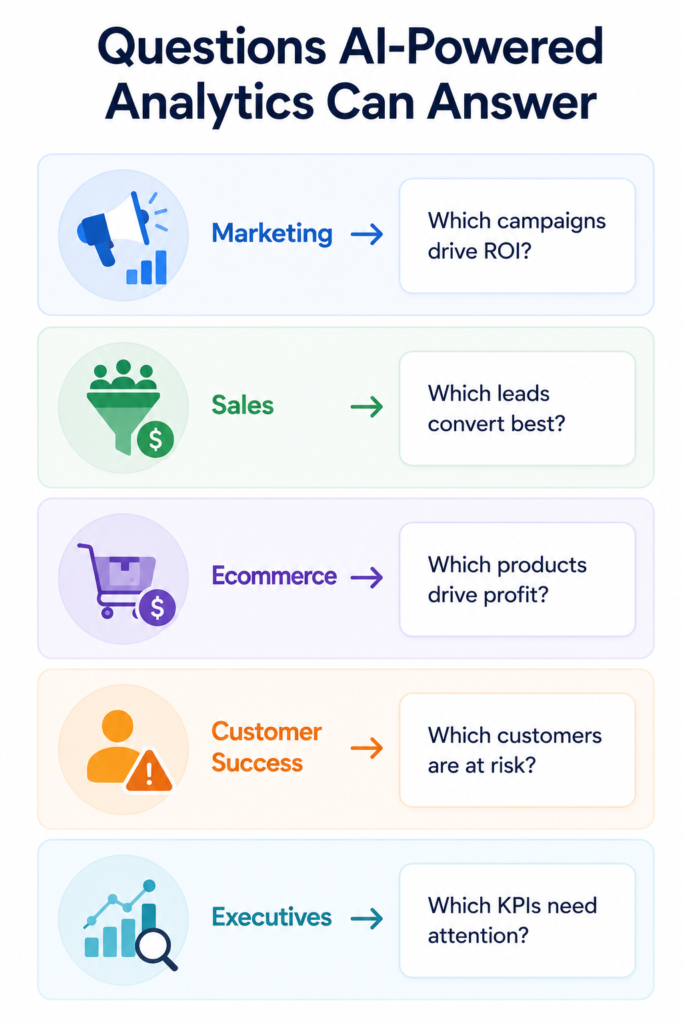
One of the biggest advantages of AI-powered analytics is flexibility.
Rather than relying on predefined reports, teams can ask questions and receive answers based on their data.
Marketing Teams
Questions such as:
- Which campaigns generate the highest ROI?
- Which channels drive qualified leads?
- Where should we increase spending?
Sales Teams
Questions such as:
- Which leads are most likely to close?
- Which products generate the most revenue?
- Which regions are growing fastest?
Ecommerce Businesses
Questions such as:
- Which products are losing momentum?
- What is driving repeat purchases?
- Which categories generate the highest profit?
Customer Success Teams
Questions such as:
- Which customers are at risk of churn?
- Which accounts need attention?
- Which features drive retention?
Executive Teams
Questions such as:
- Which KPIs require immediate attention?
- What changed this month?
- Where are growth opportunities?
Instead of searching through reports, teams receive direct answers backed by data.
What Tools Help Businesses Use AI-Powered Analytics?
The demand for AI-powered analytics has led to a new generation of AI-powered analytics platforms and AI-powered analytics software that help businesses analyze data faster and reduce manual reporting.
Traditional business intelligence platforms such as Tableau, Microsoft Power BI, and Looker remain trusted reporting solutions for many enterprises.
AI-powered analytics complements these platforms by helping users understand trends, identify anomalies, and answer questions faster.
Today, modern AI-powered analytics tools help organizations:
- Analyze information automatically
- Identify trends
- Answer questions
- Generate dashboards
- Surface insights without manual effort
This is where AI-native analytics platforms are gaining traction.
Instead of asking users to build dashboards first and find insights later, these platforms focus on helping teams get answers quickly.
The goal is simple: spend less time building reports and more time making decisions.
Many businesses also combine embedded analytics with AI-powered analytics to deliver insights directly inside the applications their teams and customers use every day.
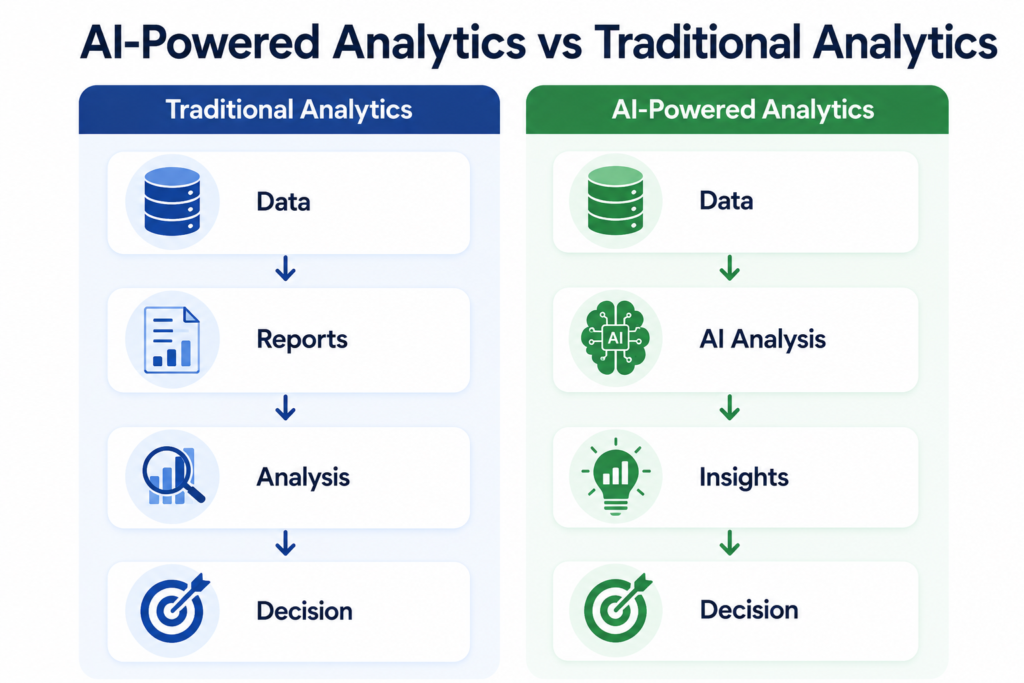
AI-Powered Analytics vs Traditional Analytics
Both approaches help organizations understand performance. The difference is how quickly they help users move from data to action.
| Feature | AI-Powered Analytics | Traditional Analytics |
| Data Analysis | Automated | Manual |
| Dashboard Creation | AI-Assisted | Manual |
| Reporting | Automated | Often Manual |
| SQL Knowledge | Usually Not Required | Often Required |
| Time to Insight | Minutes | Hours or Days |
| Analyst Dependency | Lower | Higher |
| Accessibility | High | Moderate |
Traditional analytics tools are effective for reporting.
AI-powered analytics goes a step further by helping users understand what the data means and where they should focus next.
If you’re looking for an AI dashboard builder, modern AI-powered analytics platforms make dashboard creation faster while reducing the need for SQL and manual reporting.
How Papercrane Turns Data Into Decisions
Most analytics platforms help you see data.
Papercrane helps you understand it.
Instead of spending time configuring dashboards or explaining your data structure, you connect your data once and start asking questions.
For example:
- Which marketing channels generated the most revenue this quarter?
- Which products are growing fastest?
- What changed in customer acquisition last month?
- Which campaigns delivered the highest ROI?
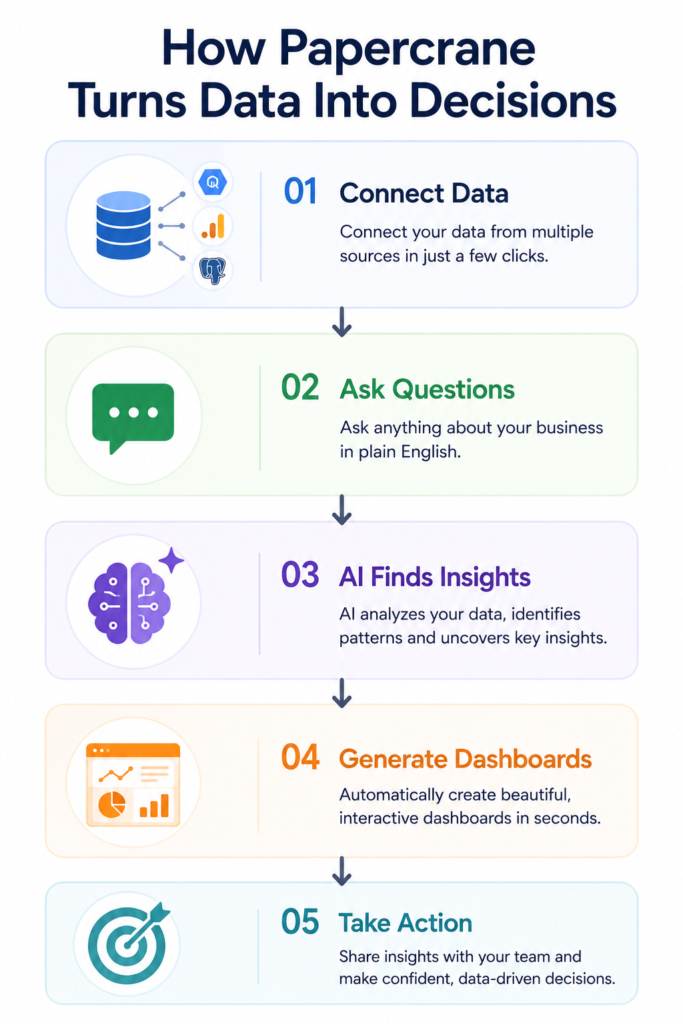
Papercrane combines AI-powered data analytics with natural language queries to generate dashboards, uncover actionable insights, and help teams make faster decisions from connected business data.
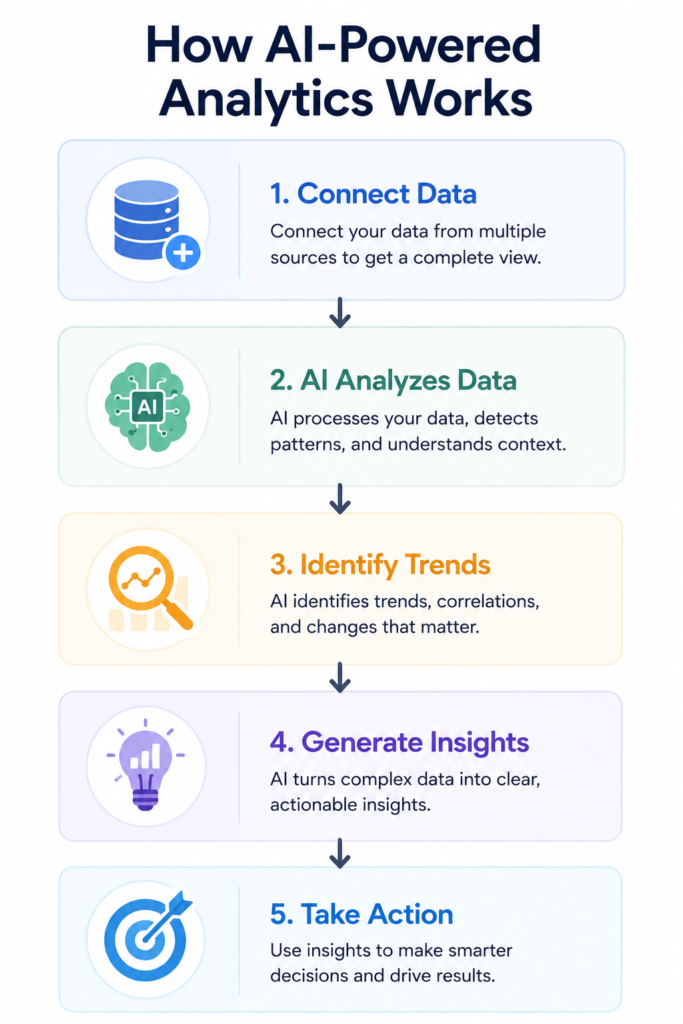
The workflow is simple.
Step 1: Connect Your Data
Connect sources such as BigQuery, Google Analytics 4, HubSpot, PostgreSQL, and other business tools.
Step 2: Ask Questions in Plain English
Describe what you want to understand.
No SQL. No dashboard configuration. No technical setup.
Step 3: Generate Insights and Dashboards
Papercrane automatically creates visualizations, identifies trends, and organizes information into dashboards.
Step 4: Share With Your Team
Share dashboards and insights using a simple link.
This makes analytics accessible to everyone, not only data specialists.
Frequently Asked Questions
What is AI-powered analytics?
AI-powered analytics uses artificial intelligence to analyze data, identify trends, generate insights, and help businesses make decisions faster.
Can AI analyze business data?
Yes. Modern AI analytics platforms can process large volumes of business data and identify patterns that would otherwise require manual analysis.
Can AI replace analysts?
AI can automate many reporting and dashboard-related tasks, but analysts still play an important role in strategy, business context, and complex investigations.
What are the benefits of AI-powered analytics?
The main benefits include faster decision-making, reduced manual reporting, better visibility into business performance, and easier access to insights.
Which businesses benefit from AI-powered analytics?
SaaS companies, marketing agencies, ecommerce businesses, finance teams, sales organizations, and customer success teams all benefit from AI-powered analytics.
Key Takeaways
- Having data is not the same as understanding it.
- AI-powered analytics helps businesses move from raw data to actionable insights faster.
- Teams can reduce manual reporting and spend more time making decisions.
- AI makes analytics accessible to non-technical users.
- Modern platforms help businesses understand what happened, why it happened, and where to focus next.
Turn Data Into Decisions Faster
Businesses that can answer questions quickly are better equipped to respond to changing markets, customer behavior, and new opportunities.
Papercrane is an AI-powered data analytics solution that helps businesses turn connected data into dashboards and actionable insights. Ask questions in plain English and get answers in minutes.
Stop spending hours building reports. Start turning your business data into decisions with Papercrane.